The Night Before
Last night, still in the UK I skipped dinner in favour of drinks with friends—pints of Guinness, cocktails, and some lovely Sauvignon Blanc. This has left me with the mildest of hangovers, one that would barely register on any normal day, but with my departure to Brazil’s rainforest first thing tomorrow, the mild anxiety achieved with a few drinks the previous night is looming larger in my life than it rightly should.
From Manchester, it’s a few hops on a plane to reach São Paulo, an overnight stop in the airport, then another flight to Rio Branco. And after that point, I’m not quite sure. I know we will be in the rainforest for several nights, sleeping communally in a shelter—likely in hammocks. But for me and my fellow companions, whom I’m still to meet, the trip has been organised by Veja, and we’re still a little in the dark with the details.
The French footwear brand, which has become somewhat of a household name in the last half-decade, is keen to show a group of European fashion types its sustainable credentials in Brazil—the country from which it sources so much of its materials. By good fortune, I’ve been included by Veja as a “fashion type,” maybe even a man of influence. I suspect this is misjudged, but flattering nonetheless, and a trip to Brazil cannot be turned down.
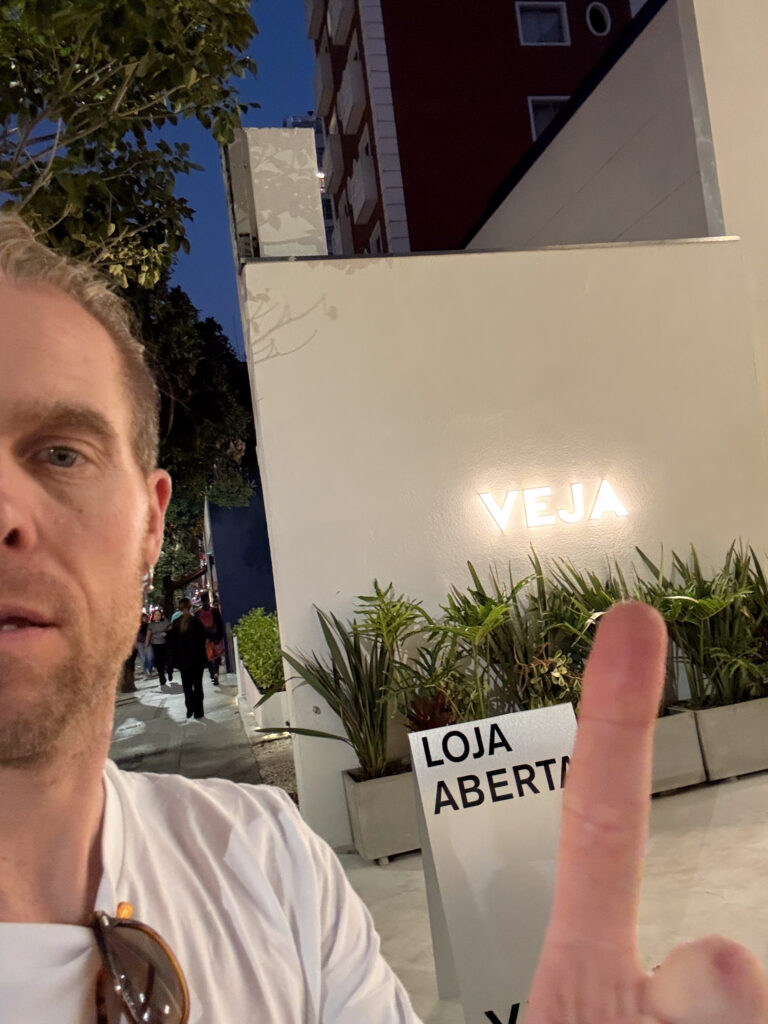
Veja experienced a seemingly unstoppable rise in status—in terms of elevation and volume of sales—which has now taken a downward trend. The brand has always had a slight nod towards its sustainable credentials—only a nod, though. They’ve never carried out any real marketing campaigns in this area. The early adopters that bought Veja were aware of what the company stood for, even if Veja didn’t talk about it. Early adopters always know. They get into the “ins and outs” of the company or products they buy. But as Veja sold more and more pairs, the product became a commodity—and that’s a fickle world to live in.
Well, I’m off to the rainforest to see how Veja operate there, see how sustainable their operation is—and sustainable in every sense of the word. I want to know about the environmental impacts, of course, but also the social and economic pros and cons, which are arguably just, if not more, important. If environmentalism exists outside the constraints of economic and social factors, then it surely becomes an ideology for those who can afford such luxury?
Veja don’t know that many moons ago, before I fell into the world of sneakers, T-shirts, and waterproof jackets, I managed to achieve the dizzy heights of an Environmental Science degree from the University of Bradford. The last time I recalled any knowledge from that heavyweight academic institution was to write a dissertation in 2002 titled “Salt Marsh Restoration versus Hard Sea Defences.” So watch out Veja—there’ll be no greenwashing me. But now, as I sit in the airport hotel, drinking a large glass of white wine to help settle the nerves, I can’t lie—I’m shitting myself about the rainforest.
Getting There
It turns out the security cameras at Manchester Airport don’t like the look of bananas, and whilst getting pulled up by the most friendly of airport security guards for a good frisk, my phone and passport went missing. Fifteen minutes of stress ensued before they eventually appeared back out of the X-ray machine with someone else’s luggage.
I’ve two flights ahead of me today, a short hop to Amsterdam and a brisk 12-hour transatlantic crossing to São Paulo. My usual rule of several airport beers, no matter the time of day, is rejected for water, my anxiety levels still running high. Getting some miles under my belt will ease that, I’m keen going.
Still Enroute
The night is spent in an São Paulo airport hotel, a grand term for what is essentially a pod, a toilet, and no windows. For the lack of windows, the pod made up for it with the smell of aviation exhaust fumes. I’ll sleep well tonight. In six hours I’ll be on another flight.
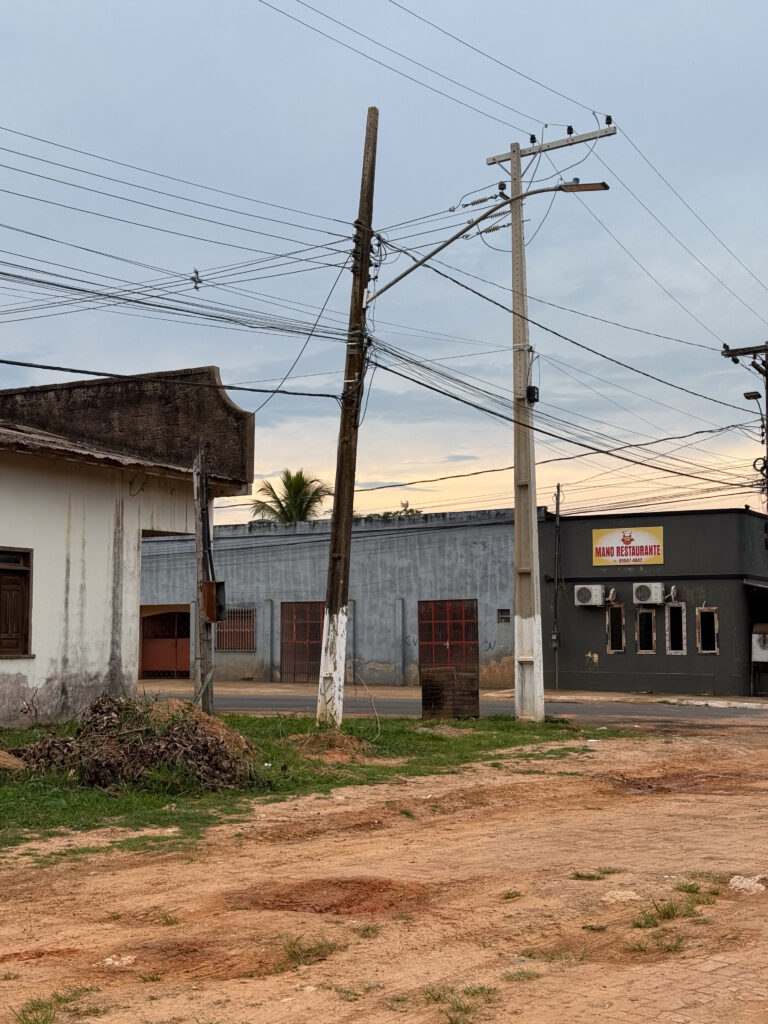
4am arrives, I grab a coffee so strong you could stand a spoon up in it and take a short walk to check-in, where for the first time I meet my fellow travellers. Pleasantries exchanged, we revert back to the depressing but emotional support of our phone screens. The flight takes us to Rio Branco, a low-level sprawling type of city with a frontier feel. It cut its teeth in the business of exports of timber and rubber. It feels a long way from home, I suspect that’s because it is.
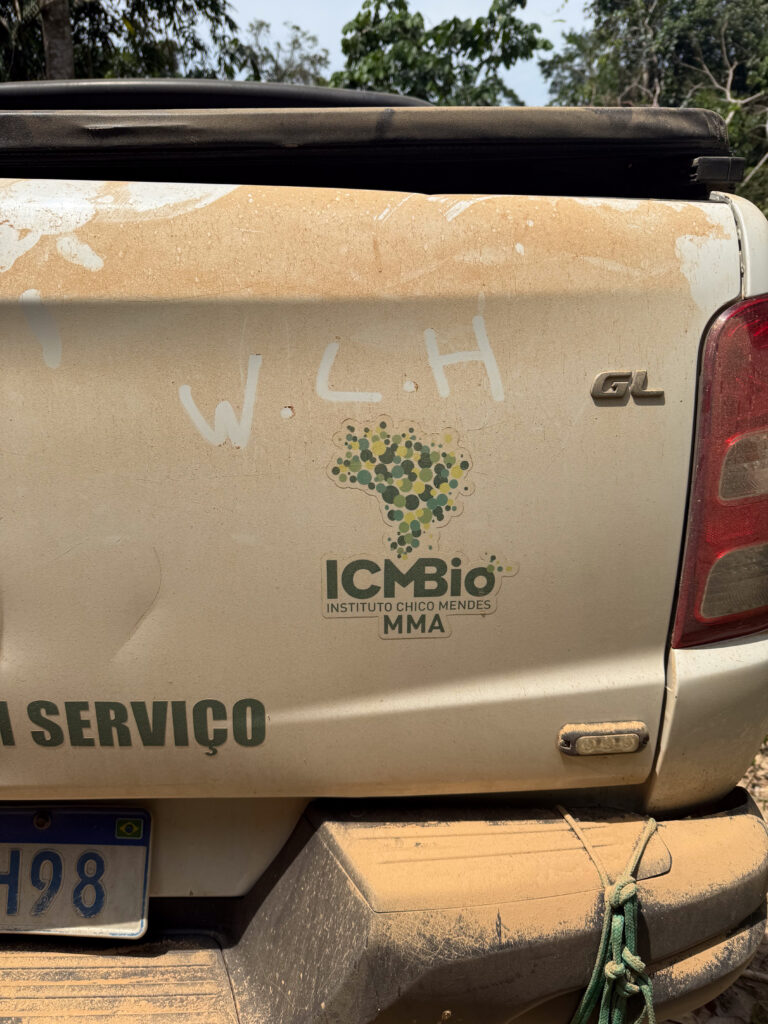
We leave in a minibus, the group starting to chat and bond as we move through a landscape new to most of us. Three hours west we swap into several off-road vehicles to complete the last part of the journey. I’ve never seen a road so straight, never seen a landscape so vast, and by the love of God I’ve never in my 44 years on this spinning sphere of water and dirt seen so many potholes. The drive was brutal and after two days’ travel plus airport food, the final miles toward remoteness were taking their toll on everyone’s endurance.
Despite being sat on my arse, Garmin notifies me I’ve just completed 12,000 steps, such is the state of the minibus suspension as it struggles with a road surface I can only describe as absolutely fucked.
Let’s Go
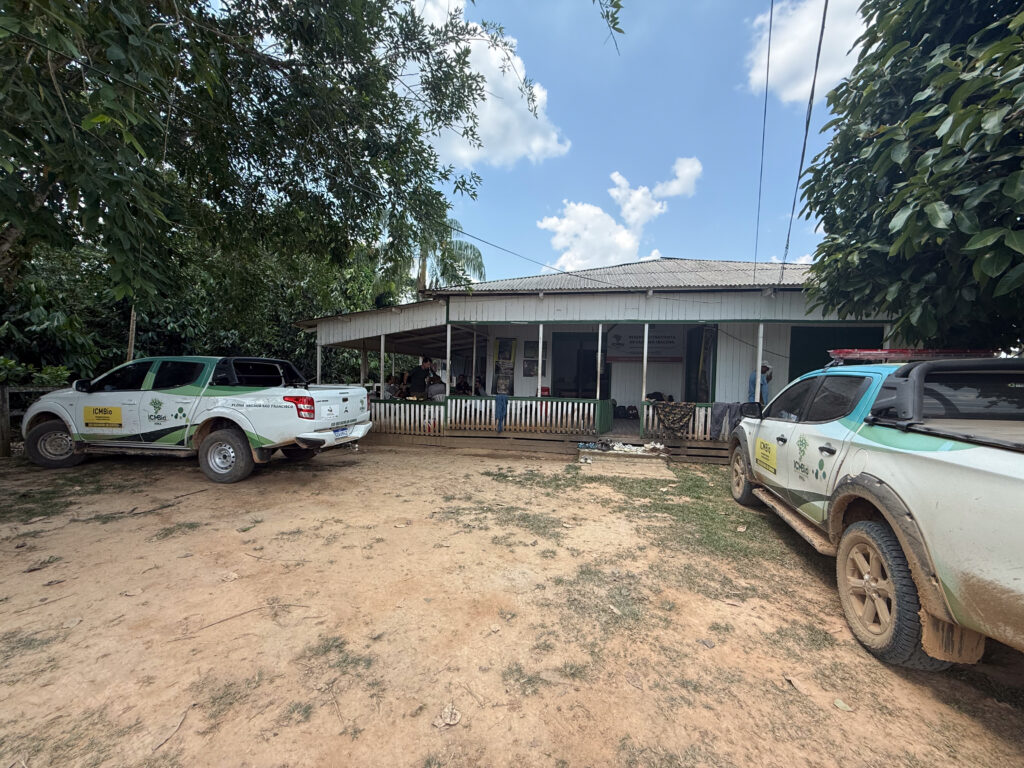
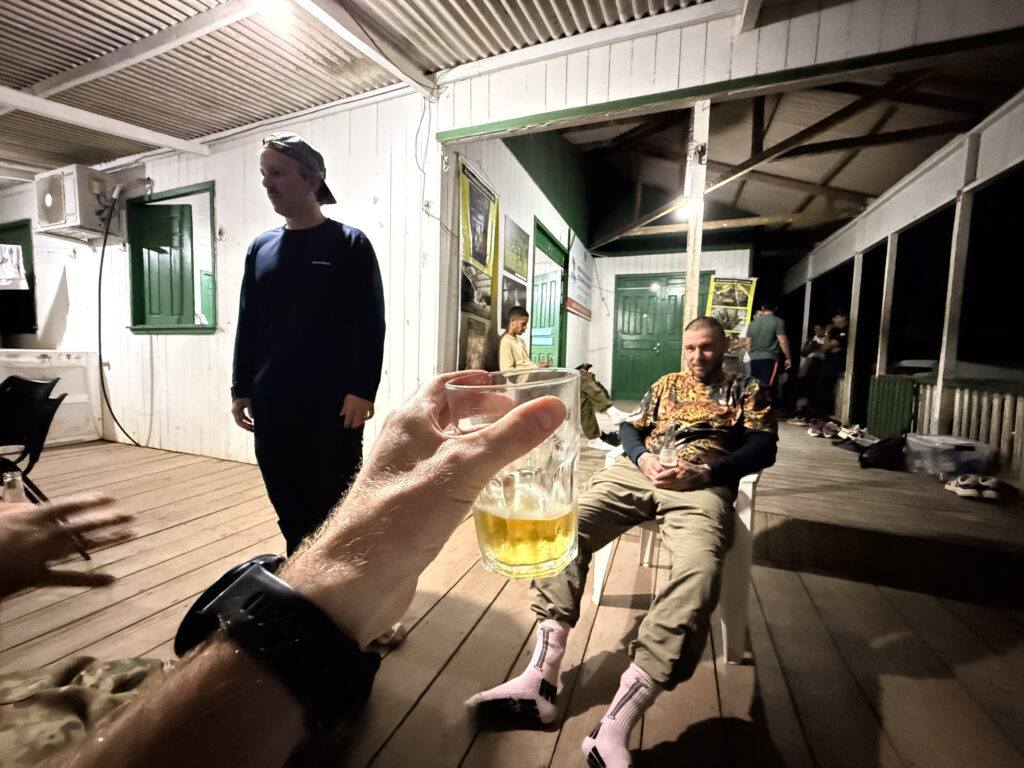
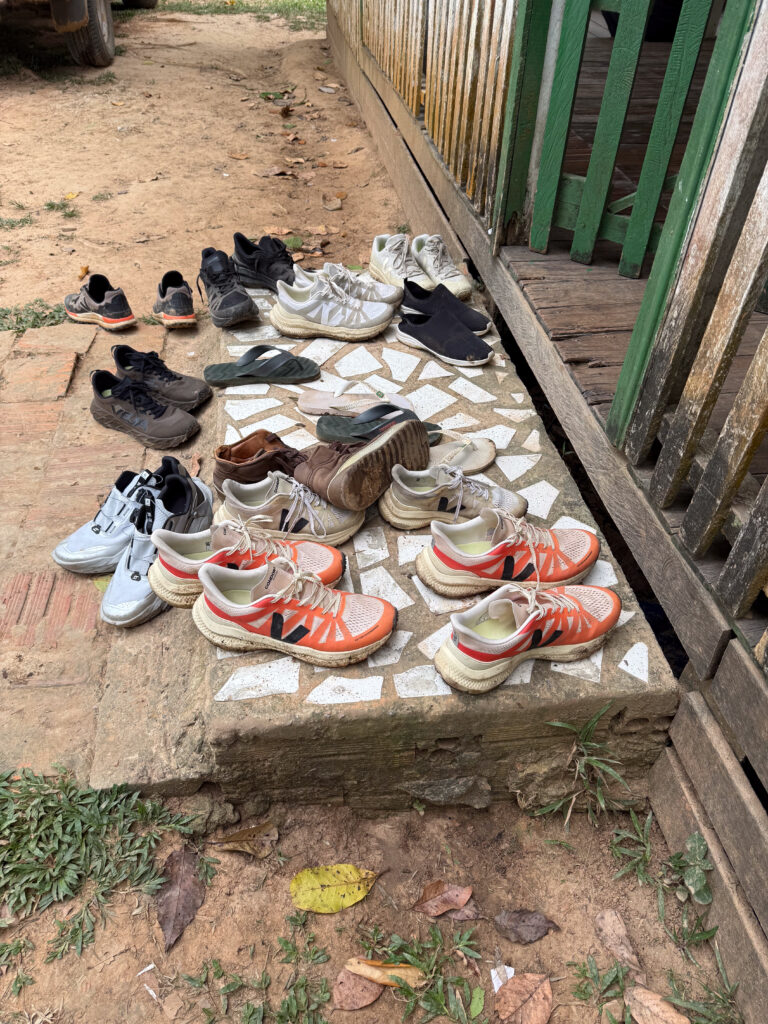
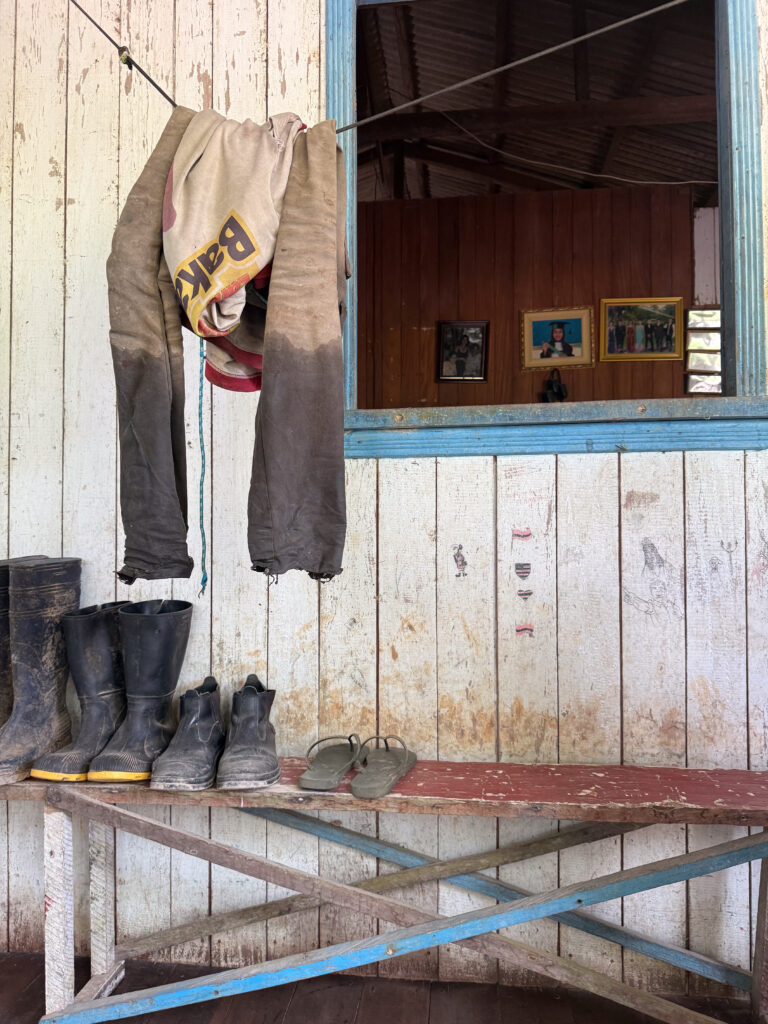
From the small town Sena Madureira we collect the off-road vehicles for the final leg of the journey into the forest. Those that need cigarettes load up on supplies, we pack the pick-ups with our rucksacks, beer, coolers and ice, and head off for two hours on dirt tracks. Final destination point: Cazumba-Iracema. Our destination point is a single-storey wooden building, painted white and green, the paintwork patinaed by the climate. Raised slightly off the ground on two-foot stilts, the building’s windows contain no glass, presumably as there is no requirement in terms of security or protection from the elements here. A good-sized veranda in an L-shape reaches across the front of the building and down one side. With a pleasant aspect across the rural landscape, this will be our hangout for food and beers for the next few days and a meeting place for those involved in the rubber extraction process that we’ve come to see.
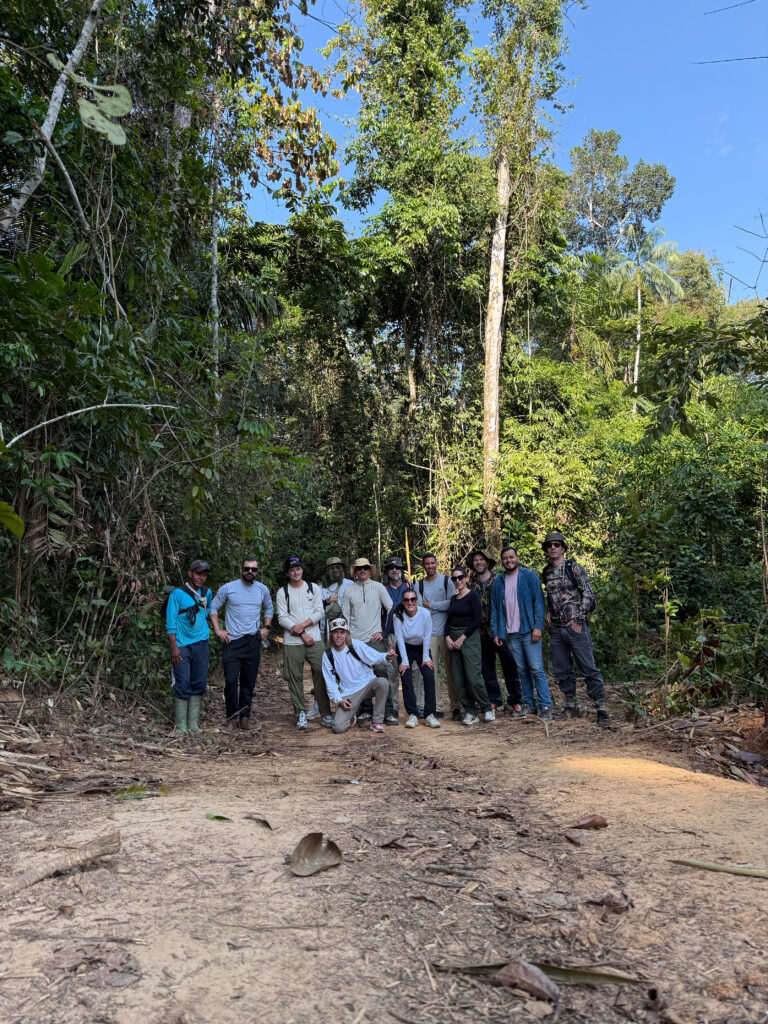
The food is a wonderful mix of pulses, grains, corn, and meat stews. Under the bright generator-lit bulbs, we start to unwind, crack a few beers, and settle into the surroundings, the feelings of distance from home, and our remoteness. We’re a group of mainly city dwellers, from Paris, Milan, Antwerp etc.—industry types that are much more accustomed to hotels than sleeping in a forest. Make no mistake about it, we are in the forest now. It’s 8pm, very dark, humid, and the sounds of the jungle are all around us—as are some big bugs. The thought of our first night here has me slightly on edge; I can tell the others are feeling it too.
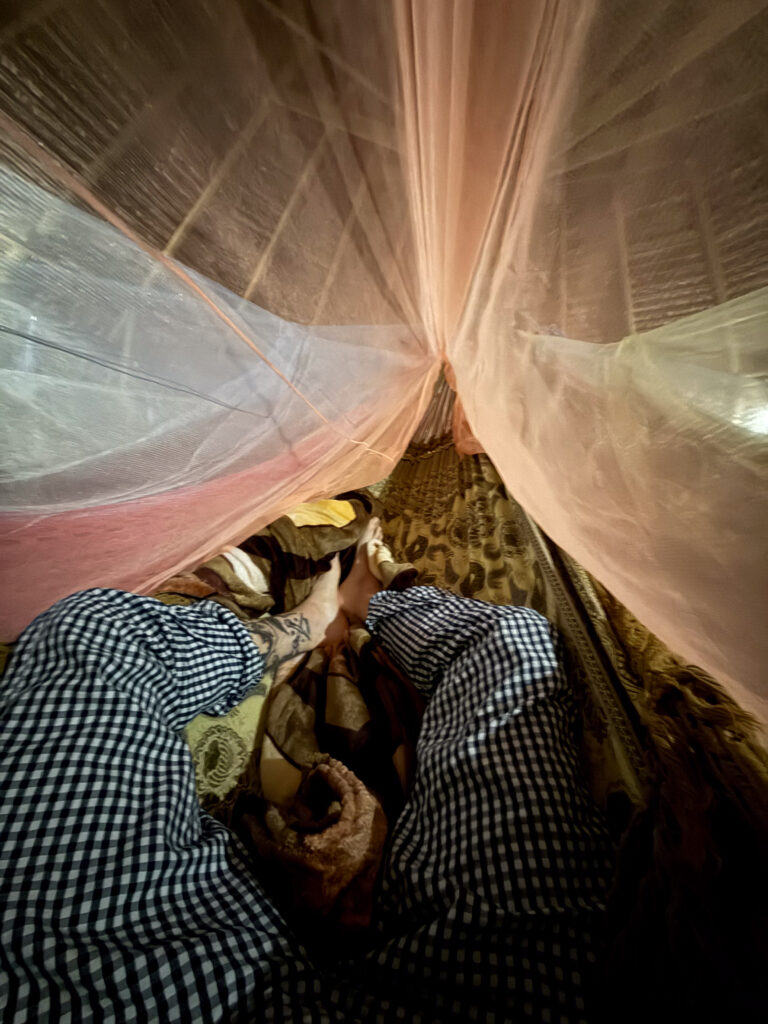
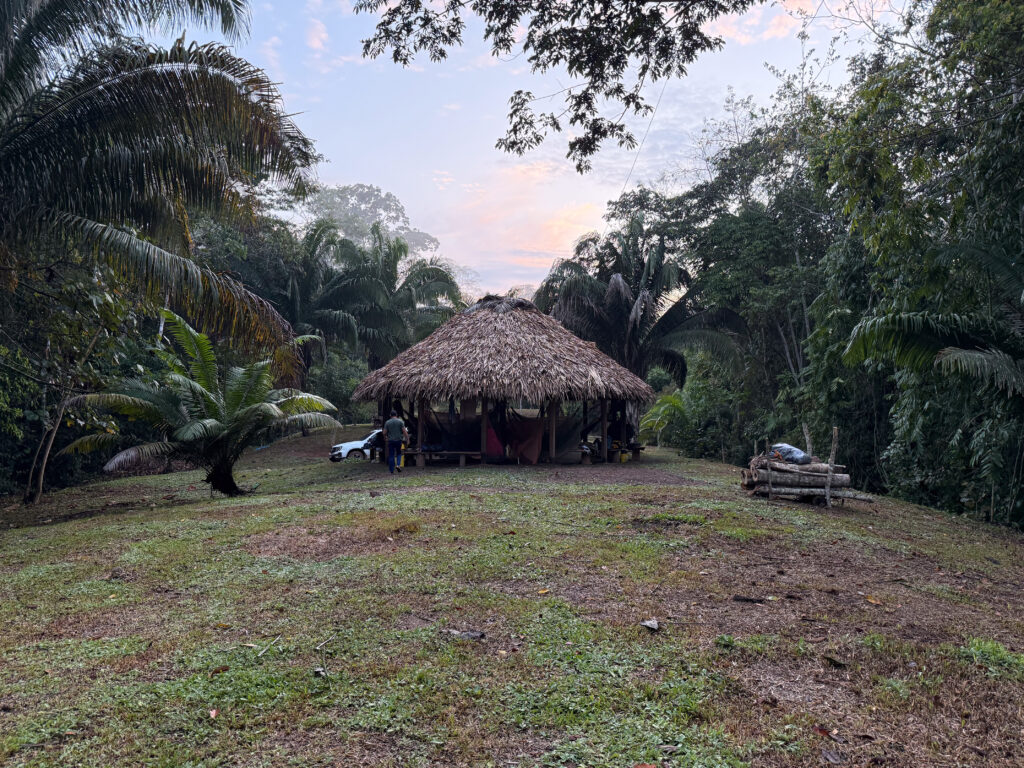
We eat, drink, and jump back into the pick-ups for a 20-minute ride slightly deeper into the trees where we will sleep. The accommodation for the 10 of us: circular, five metres in diameter, with local vegetation as a roof, no walls, dirt floor, and 10 hammocks splaying out from a central supporting mast. I climb into the hammock, pull the mosquito net over, and sleep hits me quick. I’m aware that at some point I’m kicking one of my fellow travellers in the face due to the close proximity of the hammocks, but his snoring suggests I’ve done little to wake him.
Into Forest
I wake at 4am, well rested. The sound of the forest has been encompassing all night and it has not yet faded. The natural soundscape, although loud, is calming and pleasant. Today we’re heading into the forest with one of the local rubber tappers to see the process of obtaining the raw material. Right now, everyone is still asleep. It’s getting light—the light is beautiful and as calming as the soundscape. It’s still cool and comfortable; I hope that lasts into the day.
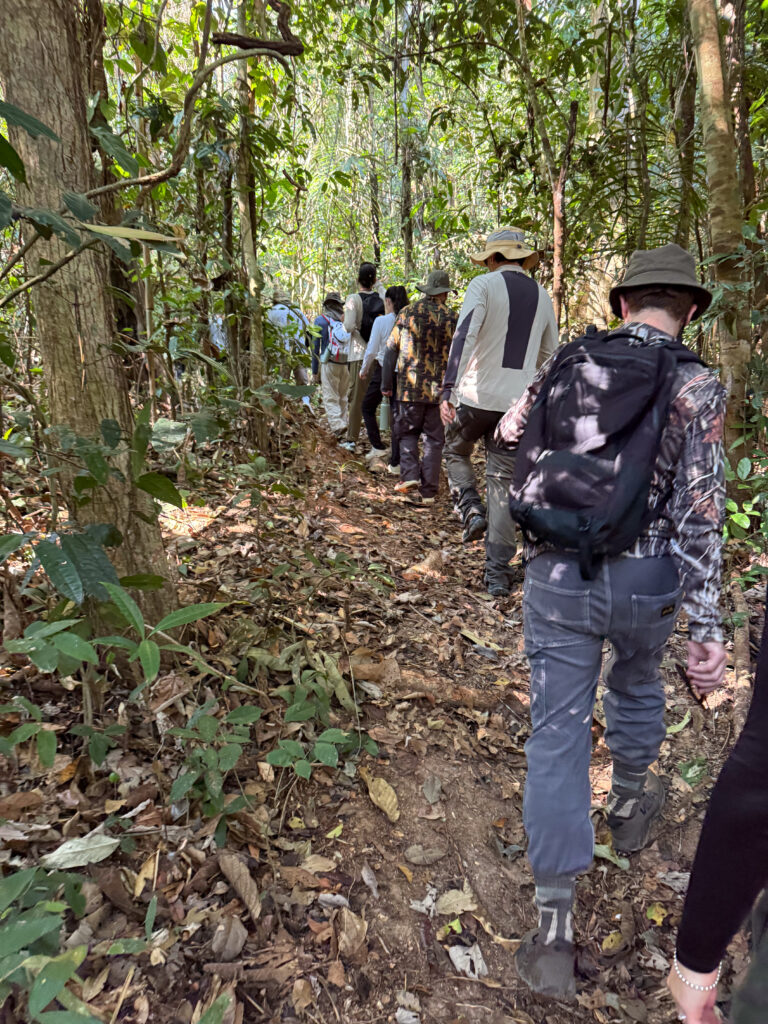
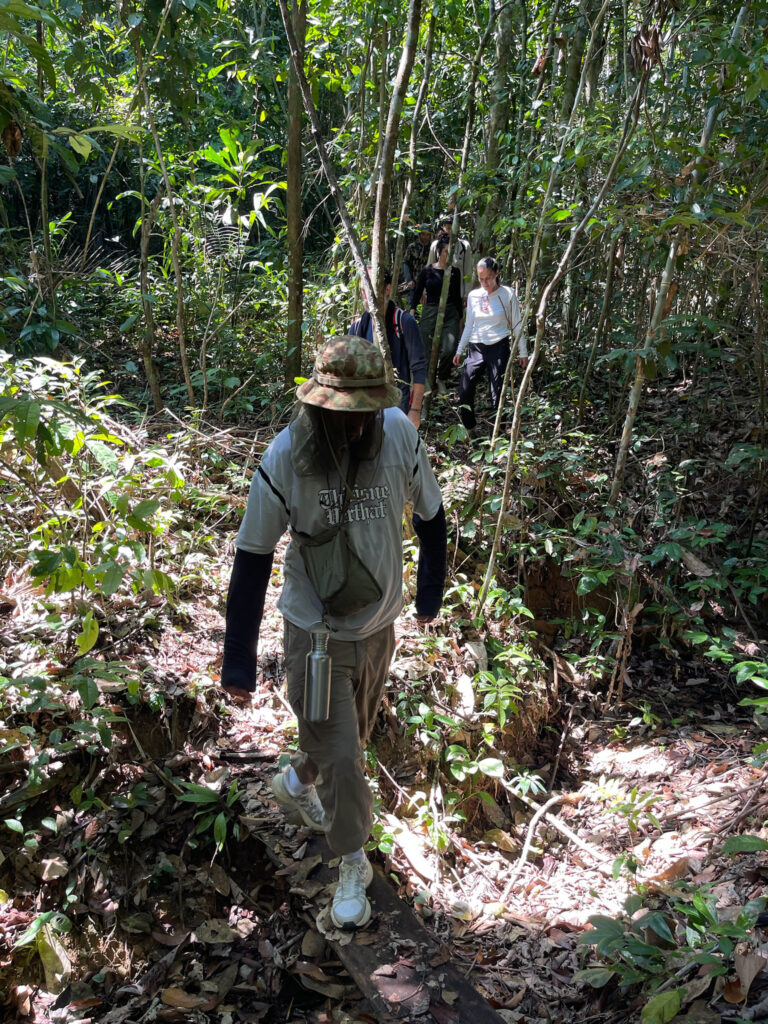
By 9am we’re trekking through the forest with local rubber tapper Manuel. The hopes of a cool day disappear quickly as we hit 35 degrees and some serious humidity. Manuel explains he carries out most of his rubber tapping before the heat of the day really kicks in and regularly sets out at 2am—an impressive feat to navigate this place in the daylight, let alone in the dark.
Manuel is part of 2,800 families who, between them, produce 900 tons of rubber for Veja, each one of the families selling their rubber to one of 20 co-operatives, who in turn sell it to Veja. The co-operatives support sustainable working practices in the forest, and it’s pleasing to see this measured with socio-economics as well as environmentally. The co-operatives oversee other production in the area—nuts, grains, regeneration, and so on—setting the standards the producers must meet to be part of the organisation.
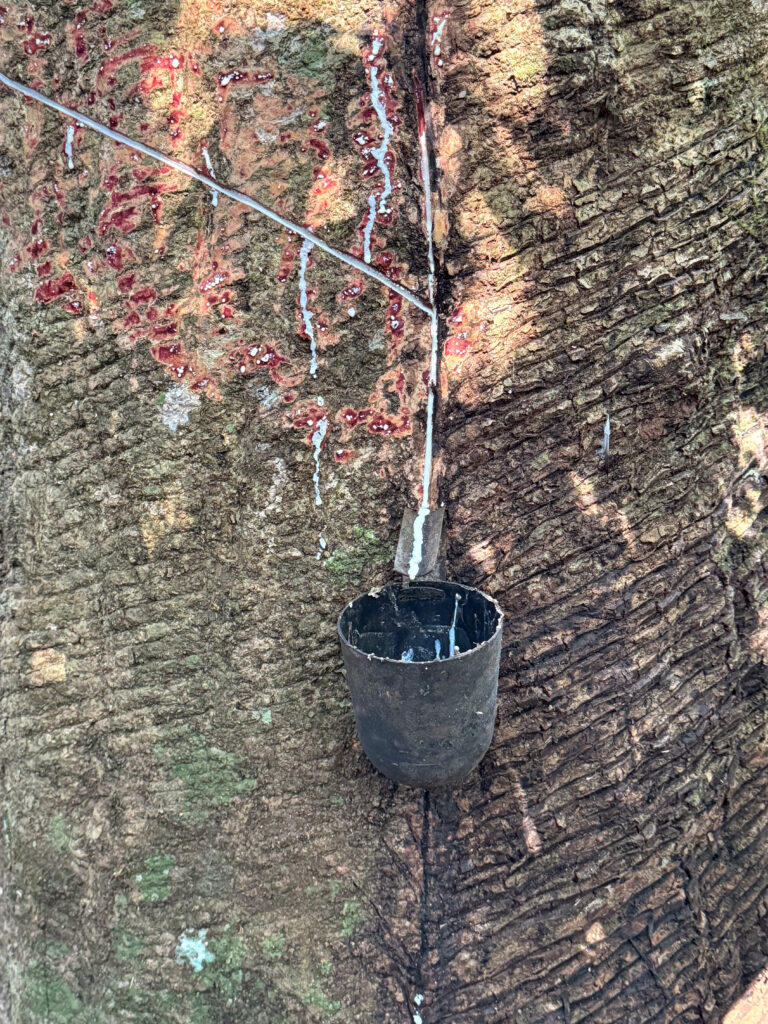
In return for hitting the standards, the co-operative, in conjunction with Veja, ensures better pricing for producers, and through this model the rubber tappers receive 3.5 times more for their product than from other industrial uses of the same raw material.
This is not a charity—the rubber tappers have to produce according to environmentally sound practices. The rubber must also meet a whole host of specifications to allow it to be used in footwear manufacturing. It must be harvested in such a way that it contains no contaminants (plus a load of other specifications I’m not going to pretend I understand).
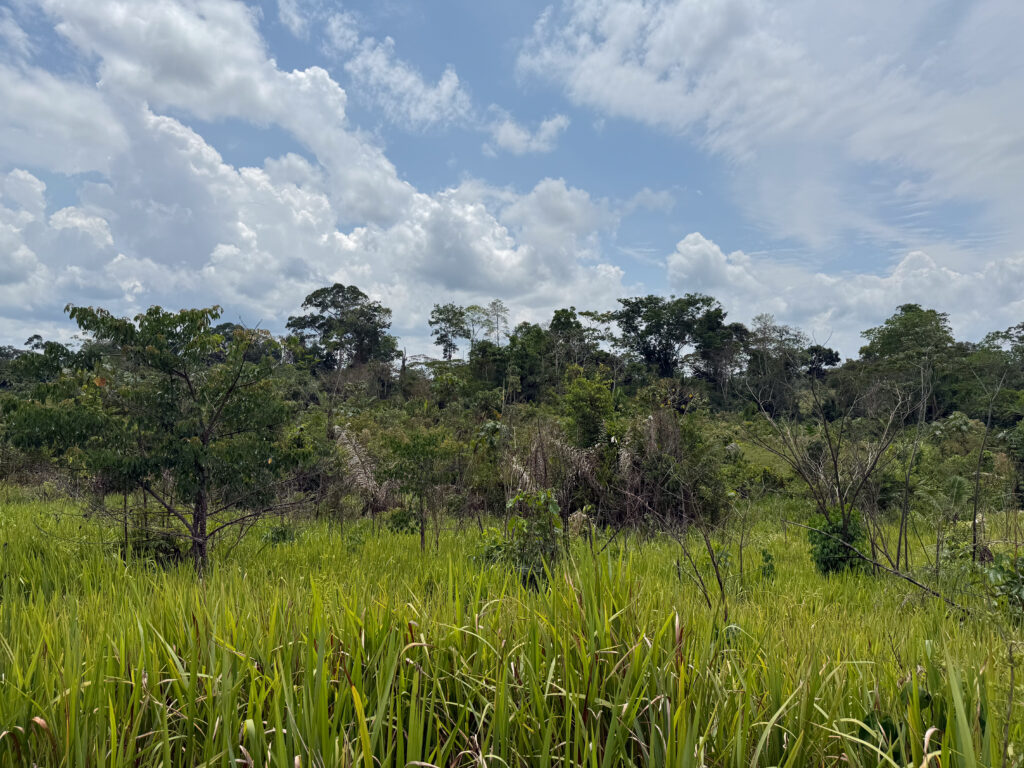
In the Acre area of the forest where this rubber extraction is taking place, you don’t have to travel far to see large areas devoid of trees, cleared by cattle farming at a rapid rate. Using the slash-and-burn method, the plumes of smoke can be seen across the landscape, and at times the smoke creates a fog over the local areas. But who am I to criticise the activity of deforestation? Last time I looked, the UK lacks tree cover in favour of farming, and we’re nearly devoid of native woodland with rich biodiversity. 59% of Brazil’s landmass is forested compared to 13% of the UK, so I’m on shaky ground.
That said, the importance of Brazil’s forest cannot be understated—especially when we think of biodiversity, carbon storage, food supply, and medicine. These forests are so vast that the water vapour they release impacts global weather patterns. Yes, the rest of the globe has plundered much of its forest reserves; a double standard in expecting Brazil not to do the same with theirs clearly exists. An uncomfortable issue we might all have to swallow, as global deforestation only increases the importance of Brazil’s natural environment.
The rubber co-operatives and Veja are facilitating another way to use this landscape that enables—in fact, requires—the survival of native rainforest. They pay good money to those who, through their work, preserve Brazil’s and the globe’s assets. The three elements of sustainability working together: environmental, social, and economic. You remove one of these and it all falls down.
To get these three elements functional, this system and process leaves itself open to criticism. It’s not perfect in any one area—it’s all a balance. For example, not every Veja shoe is made with 100% rubber from this process. Many models are, but my favourite, the Condor 3, is only 25% natural rubber; the rest is synthetic. The rubber tappers and co-operatives, although being paid 3.5 times the market value, need more economic support to keep driving improvements they want to make—to their businesses, organisations, and personal lives. And the most environmentally sustainable approach to footwear is going barefoot.
I’ll make a wild assumption that walking around barefoot is not for most of us. Plus, it would have no economic or social benefit— so we’re all going to buy some shoes sometime soon. And if you like the type of products Veja make, how it looks, how it fits and if the price (which is not cheap) can be met, then there are reasons that go beyond the product itself that might get you on board.
Veja is not an ideological environmental project, so feel free to tear it to pieces if you wish. What it is, is a positive enviro-socio-economic force in footwear manufacturing that’s proactive (and quite quietly) making a massive difference. How many sneaker brands can say that?