

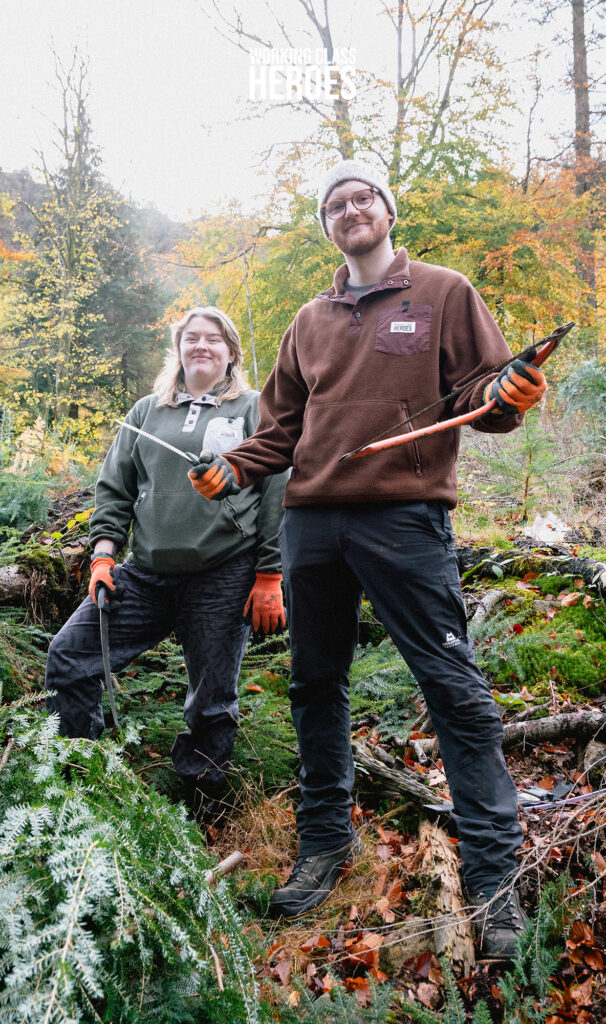
Last week we were back out in the woods – it’s been too long! The team had been invited by Cumbria Woodlands to explore one of Britain’s temperate rainforests. In the morning, we took a closer look at the forest floor to see what’s happening beneath the canopy. Then, in the afternoon, we helped restore a former Western Hemlock plantation back to native woodland.
A walk into the temperate rainforest.
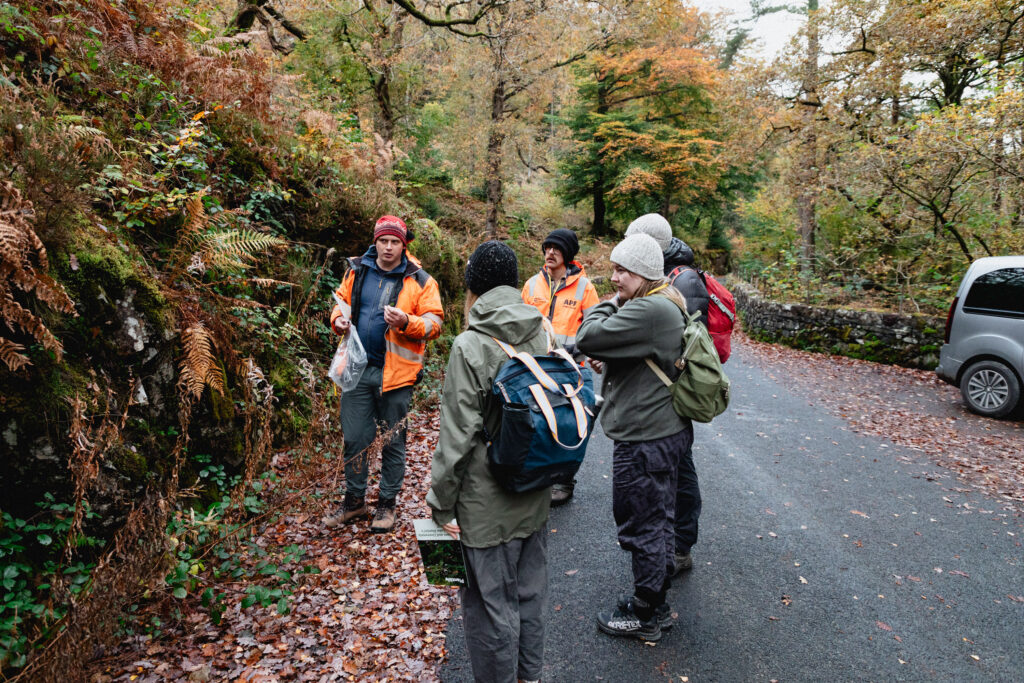
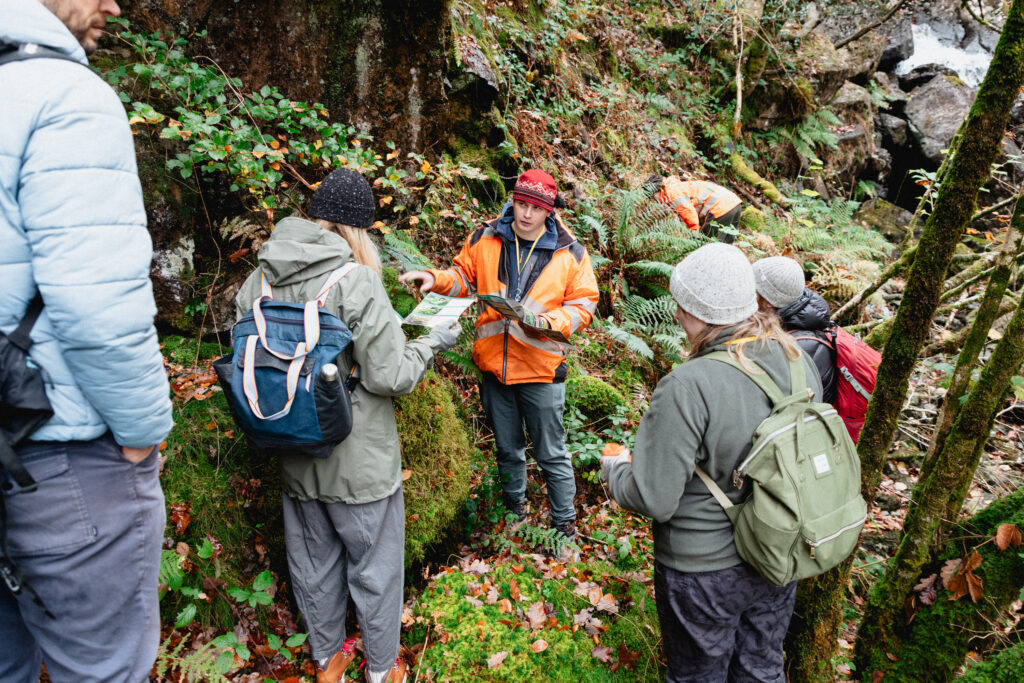
To start the day off we met up with Angus, Jamie and Ewen from Cumbria Woodlands. Angus has been leading the Cumbrian Rainforest Project and took the team on a walk to see what makes a rainforest a rainforest and the species of plants found within them.
Working in collaboration with Plantlife, Cumbria Woodlands has been raising awareness of Cumbria’s temperate rainforests. Providing events, demonstrations and webinars they have been increasing the quality of knowledge, advice and management of Cumbria’s temperate rainforest landscape.
“The Cumbrian Rainforest Project is a programme of outreach and engagement events and activities to inspire high quality woodland management and the wider stewardship of the temperate rainforests of Cumbria.” – Cumbria Woodlands.
Todays walk and talk focused on the mosses and liverworts found within the rainforest but other plants and species such as lichen and ferns can also be indicators of a rainforest.
What is a temperate rainforest?
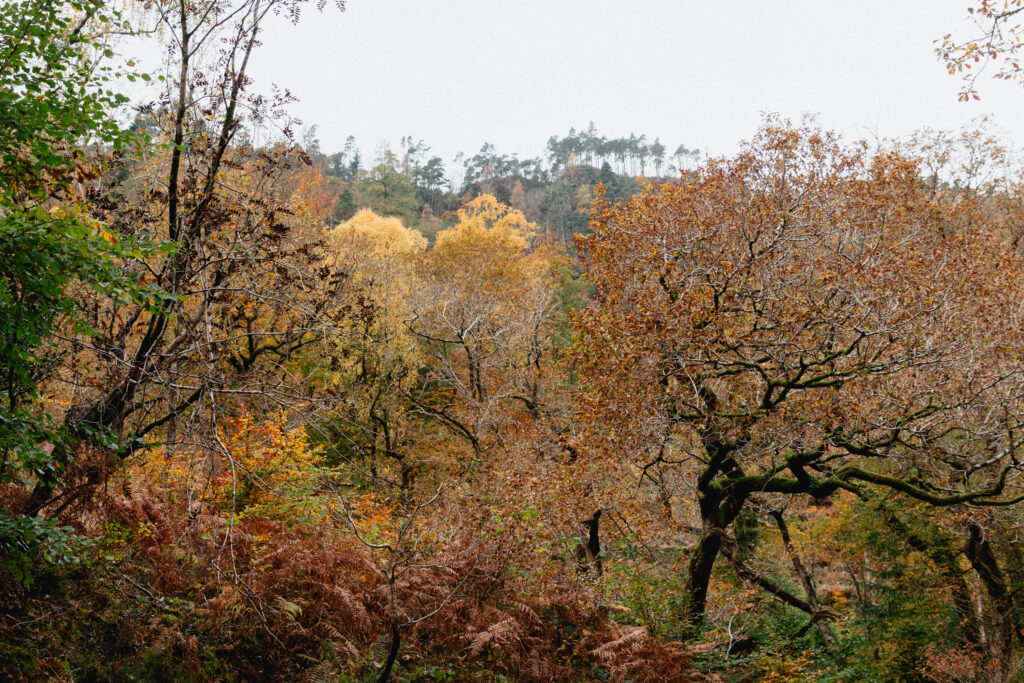
Temperate rainforests are globally quite rare, they occur when the climate is mild and wet. They are characterized by a diverse and high growth of lichens, bryophytes (Mosses and liverworts) and ferns. Many of these species are highly specialized and may only be found in temperate rainforests.
Here in Britain our few temperate rainforests are found on the west of the country where the climate is mild and wet, due to the influence of the gulf stream. Human interaction within the landscape has greatly shaped what we have left today and what we do have is internationally important and of great value.
What are mosses and liverworts?
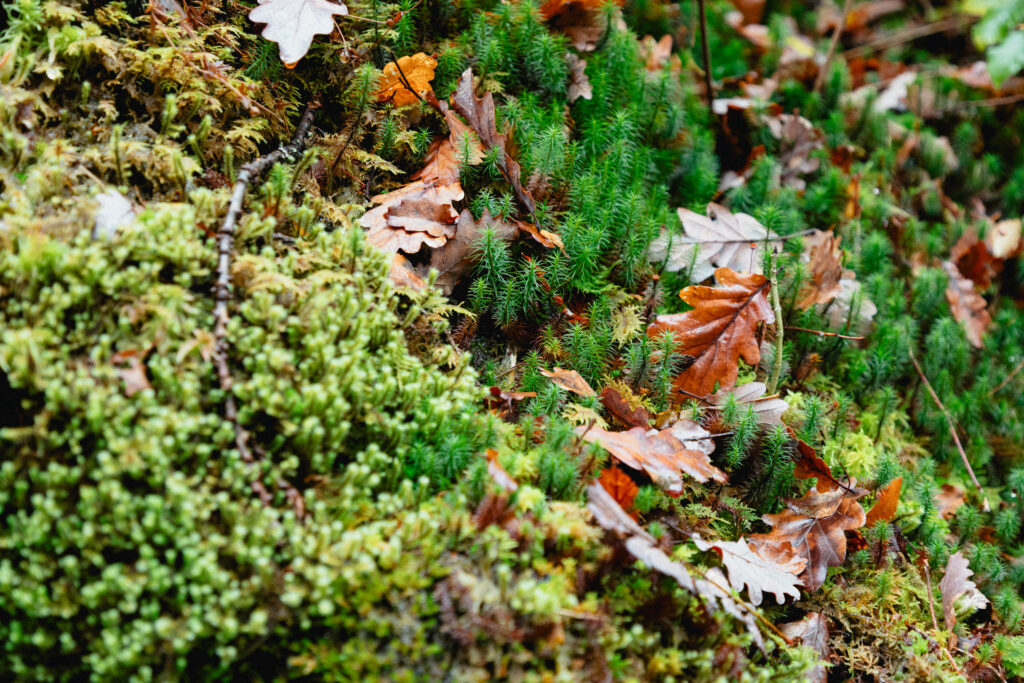
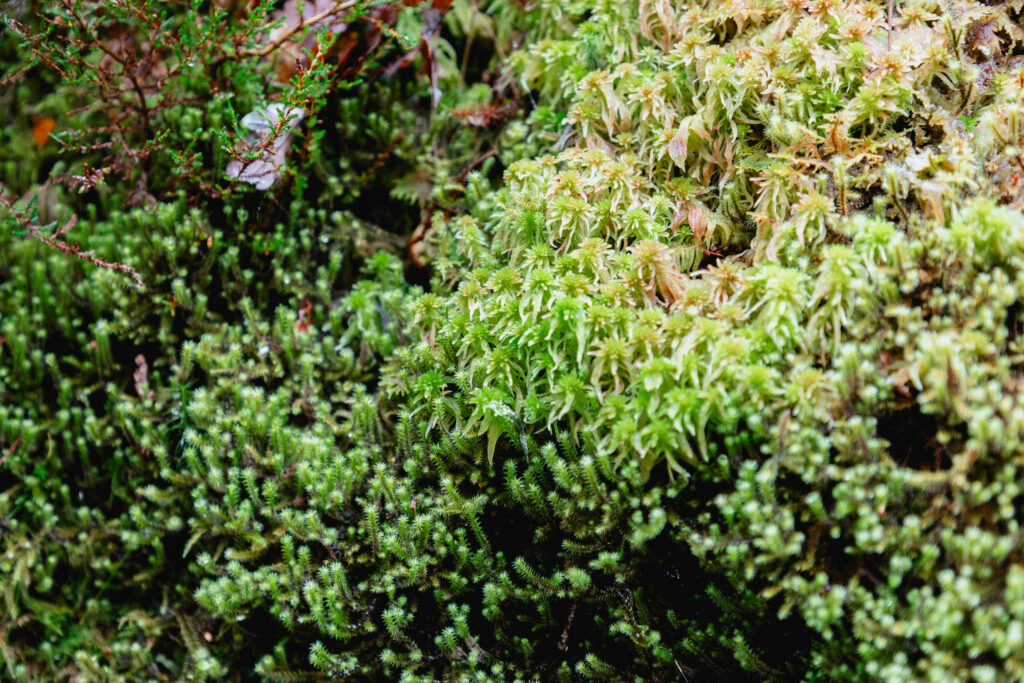
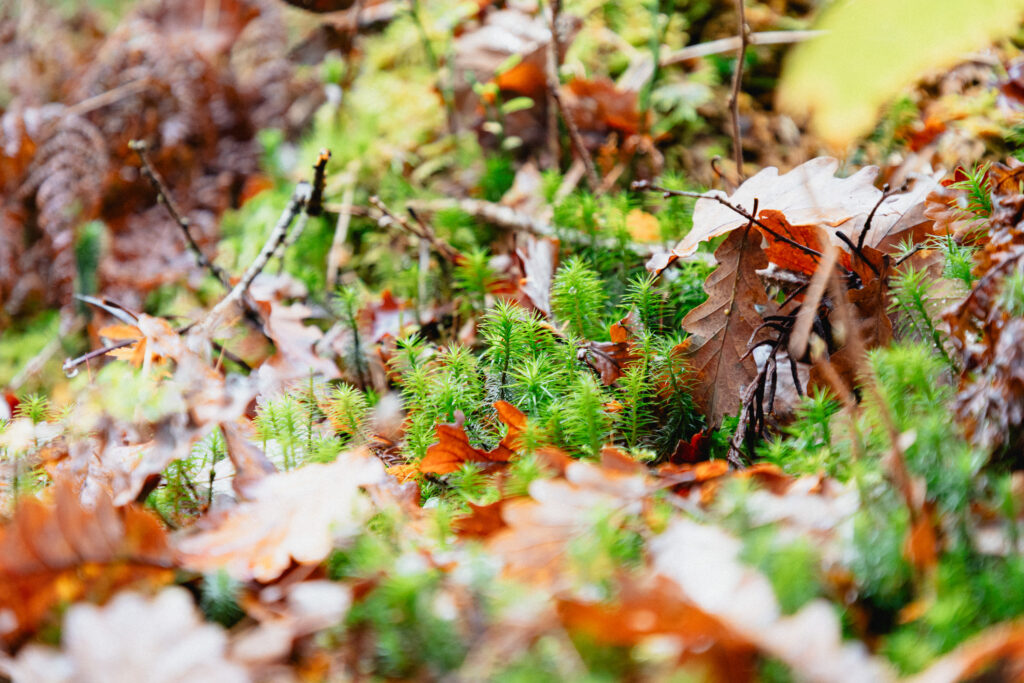
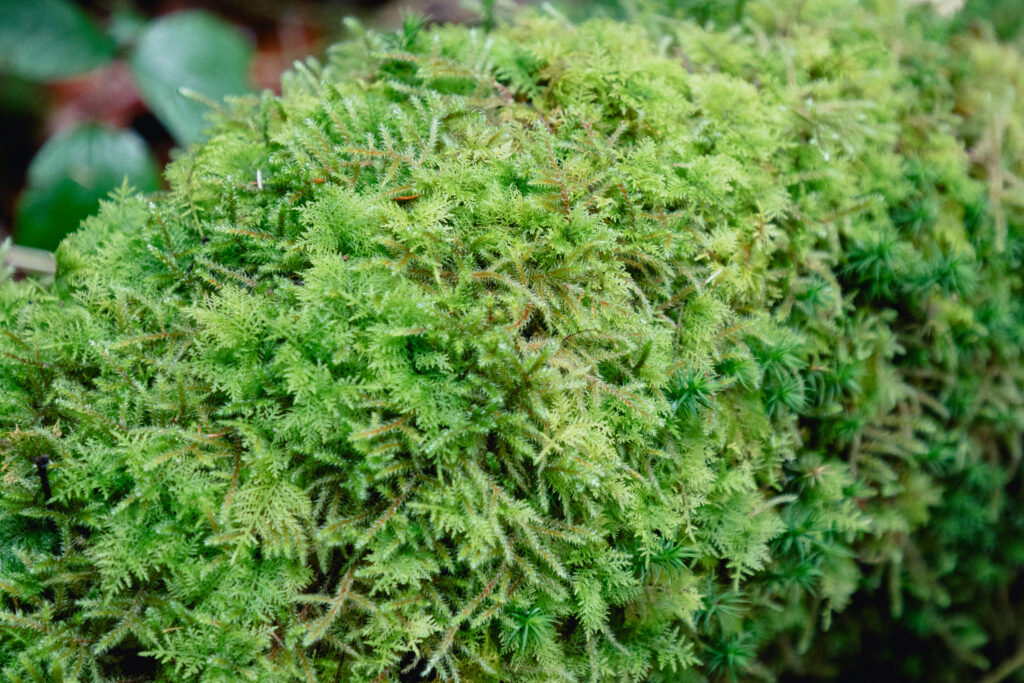
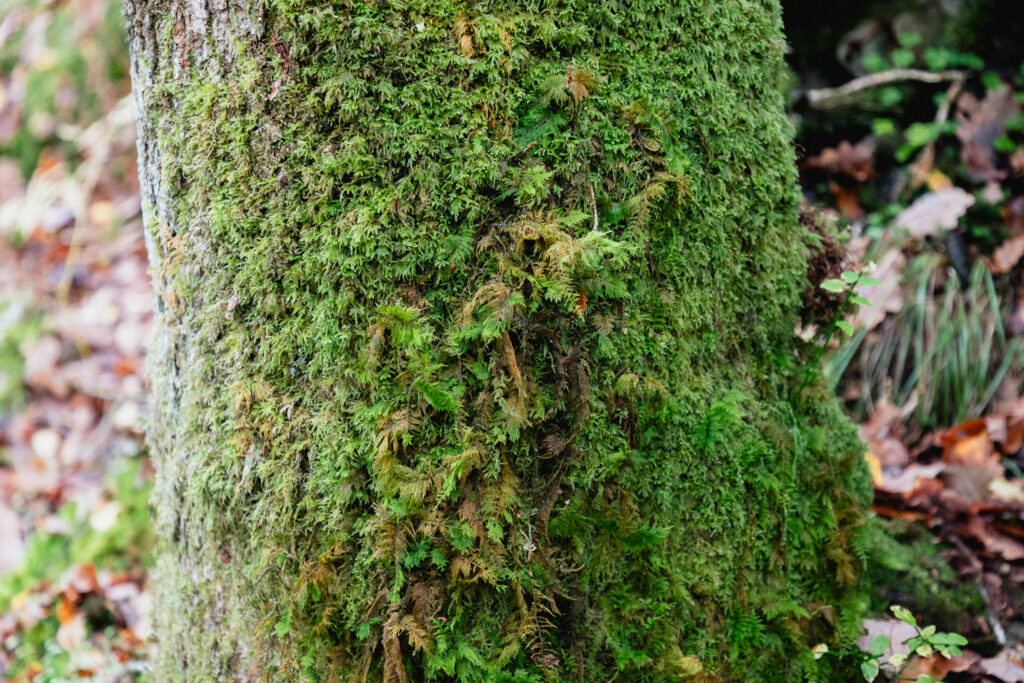
Mosses and liverworts (Which are collectively referred to as bryophytes) are some of the oldest land plants on the planet. Most of them have a simple structure with a main stem and branches covered in leaves, they don’t have roots and instead absorb water and minerals directly through structures on their stems and leaves.
The difference between the two is in their structure; Mosses have leaves all around their stem whilst liverworts generally have two rows of leaves, one up each side of the stem.
Why are the mosses and liverworts of temperate rainforest so important?
The quantity and frequency of rainfall, streams and rivers along with the clean air and rugged landscape make the temperate rainforests of western Britain a substantially important habitat for mosses and liverworts.
They are excellent indicators for the health and quality of a habitat and play an important role in the ecosystem. With over 1000 species of mosses and liverwort in the UK, our rainforests have a rich and diverse assortment of these plants. This diversity also includes a number of species that are rare, some of which are only found here which is why it’s so important to manage and protect these areas of woodland.
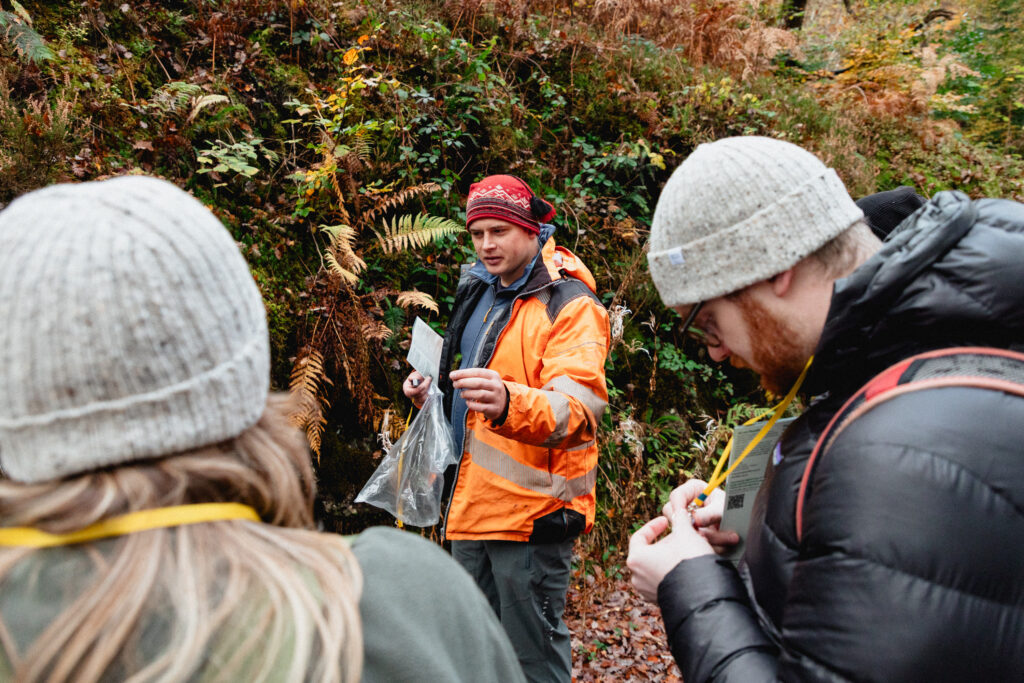

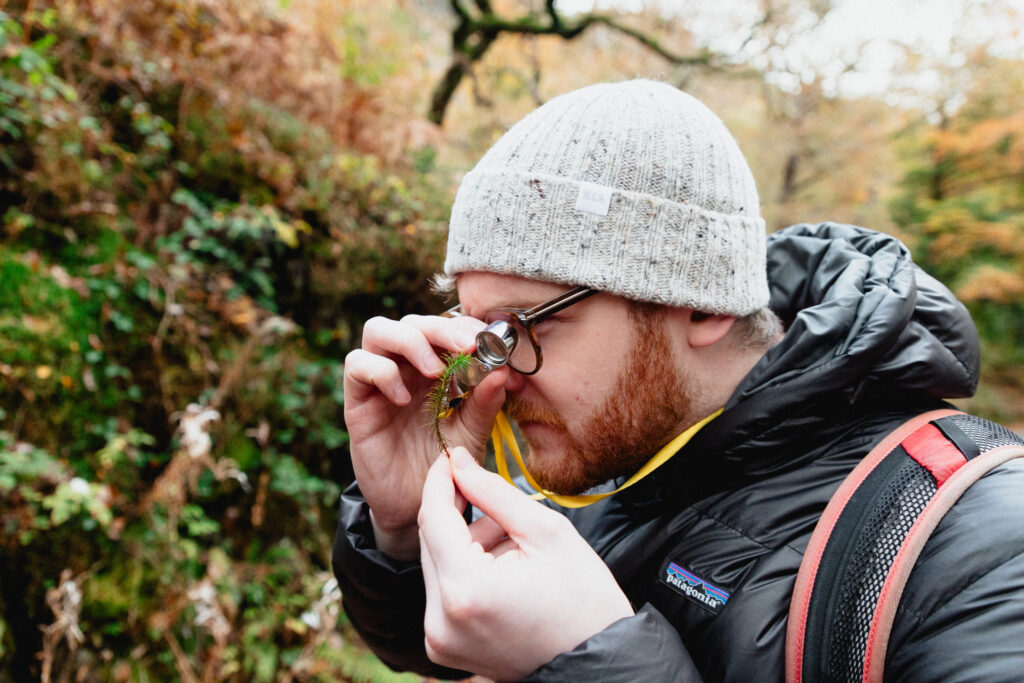
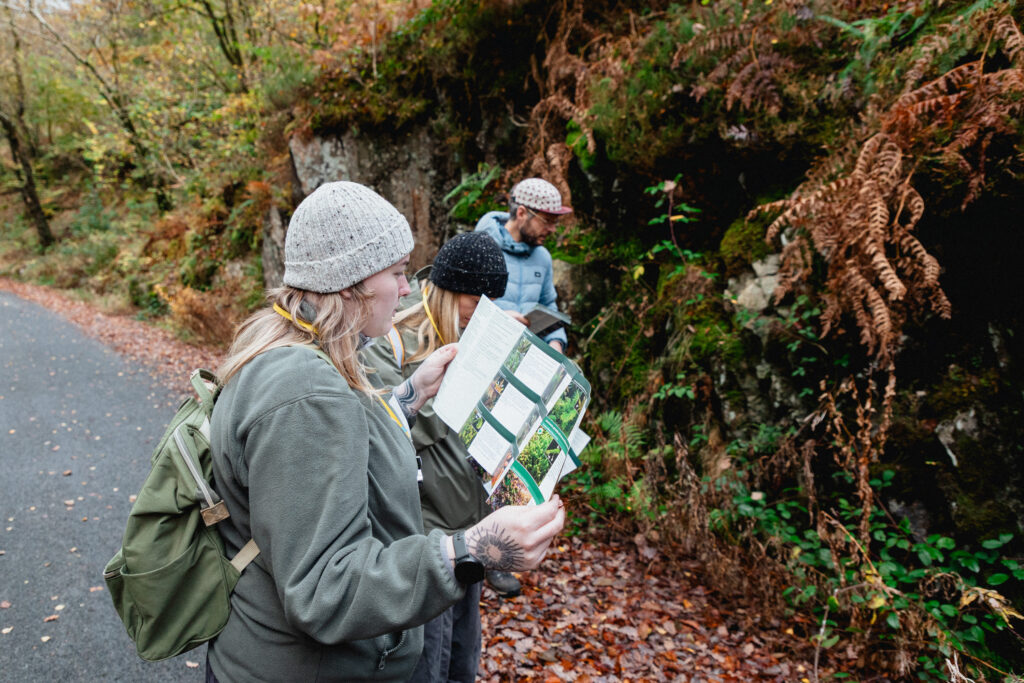
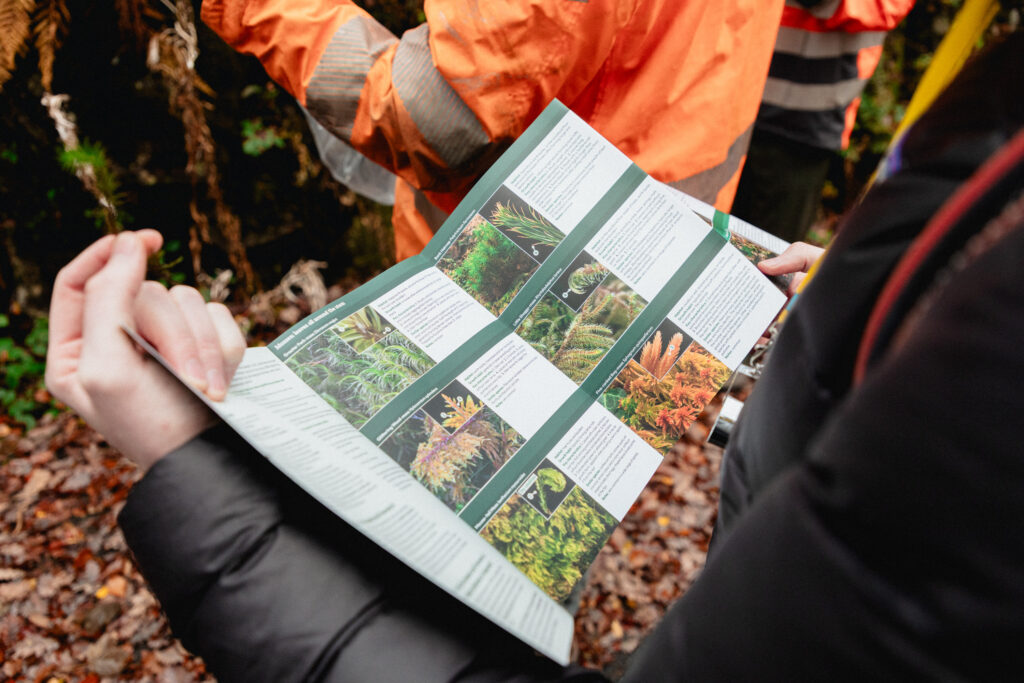
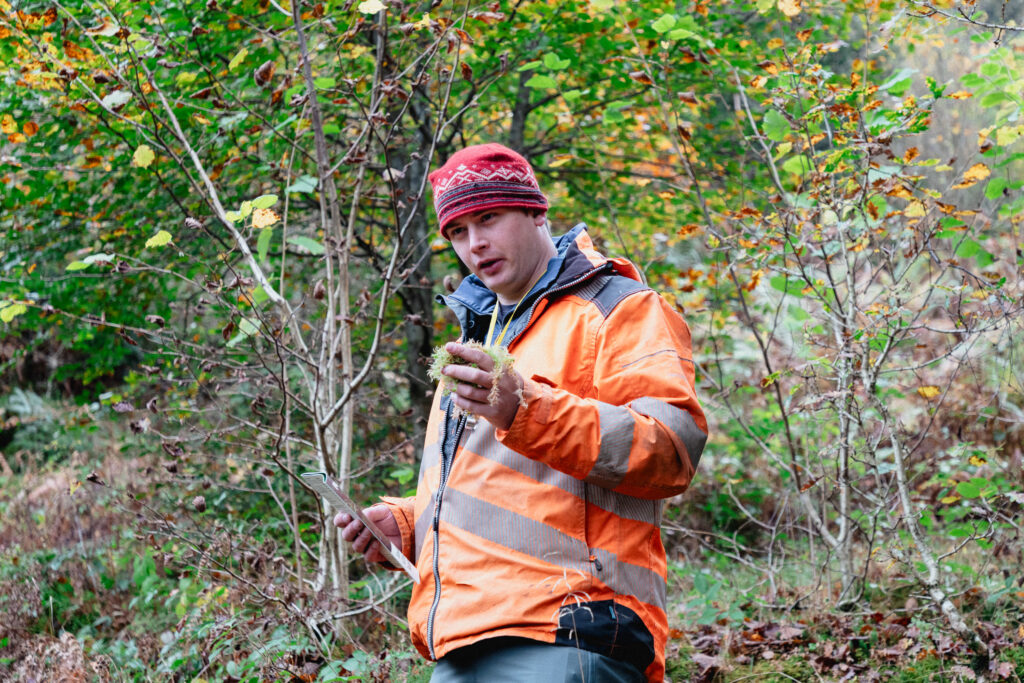
After a quick briefing from Angus we were given a hand lens each in order to view the elements of the mosses and liverworts up close. Using the Plantlife guides, we were tasked with identifying the different species using their identifying elements such as their colours, stem shapes and leaves.




More information on Britain’s temperate rainforests can be found on the Plantlife website: Temperate Rainforest – Plantlife
Removing Western Hemlock to help native species thrive.
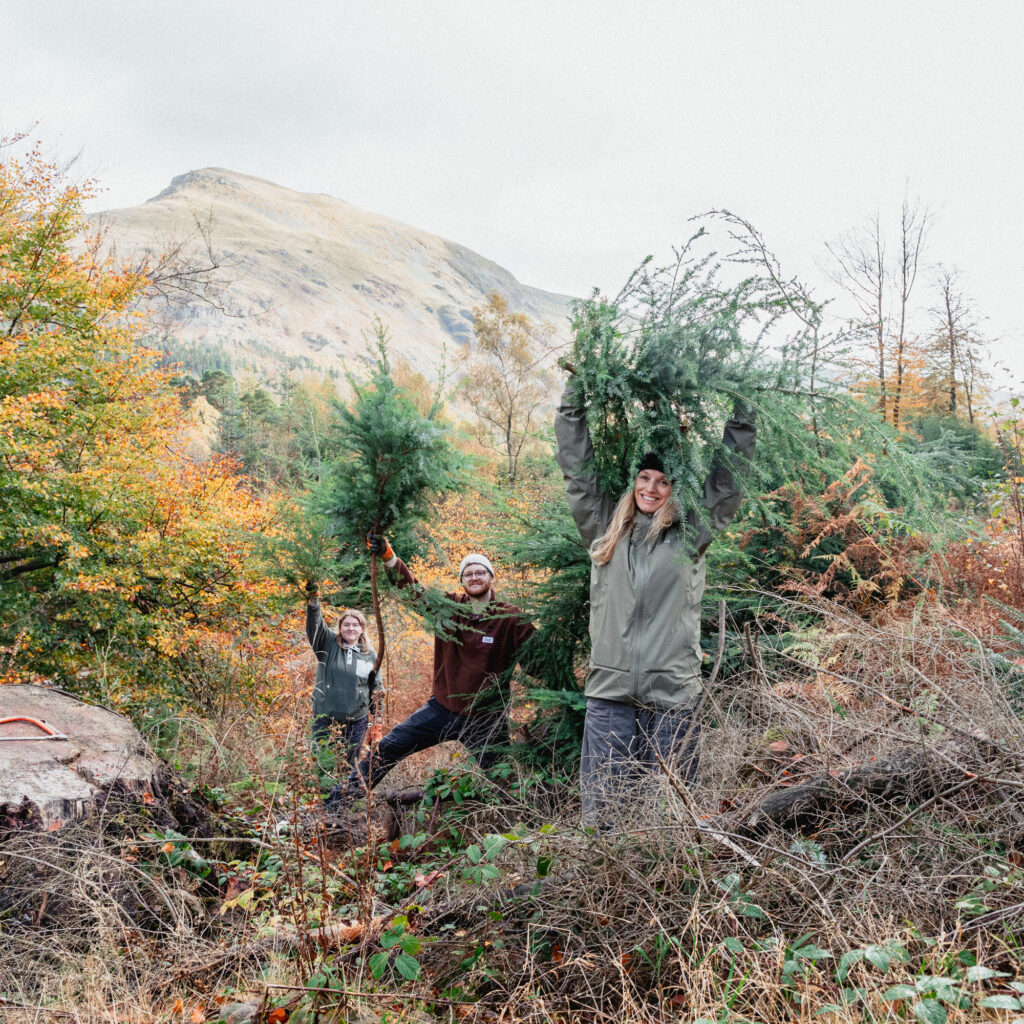
The second half of our day (after we’d stopped for a scenic lunch) was to clear some Western Hemlock.
Western Hemlock is a tree native to the northwest coast of North America, being an evergreen tree the leaves (or needles) don’t die off in the autumn like native species such as Oak. This means that the tree is able to photosynthesize all year around, helping it grow much faster. This rapid growth means that when competing against native slower growing species the tree can outcompete allowing for dominance in the woodland.
First introduced to Britain in 1852, the tree is mainly used for timber and wood pulp. Plantations of Western Hemlock are often very dark as they can cast very dense shade. This shade means few species of plants and wildlife can live beneath them.
The purpose of our visit today was to help clear these trees while they’re in their early stages to allow our native species to get away and make this area of woodland easier to manage in the long term. With this area being a previous plantation it was a bit treacherous underfoot so care was needed to make sure we didn’t end up on the floor alongside the trees.
For more information on Western Hemlock you can visit the woodland trust website here: Western Hemlock

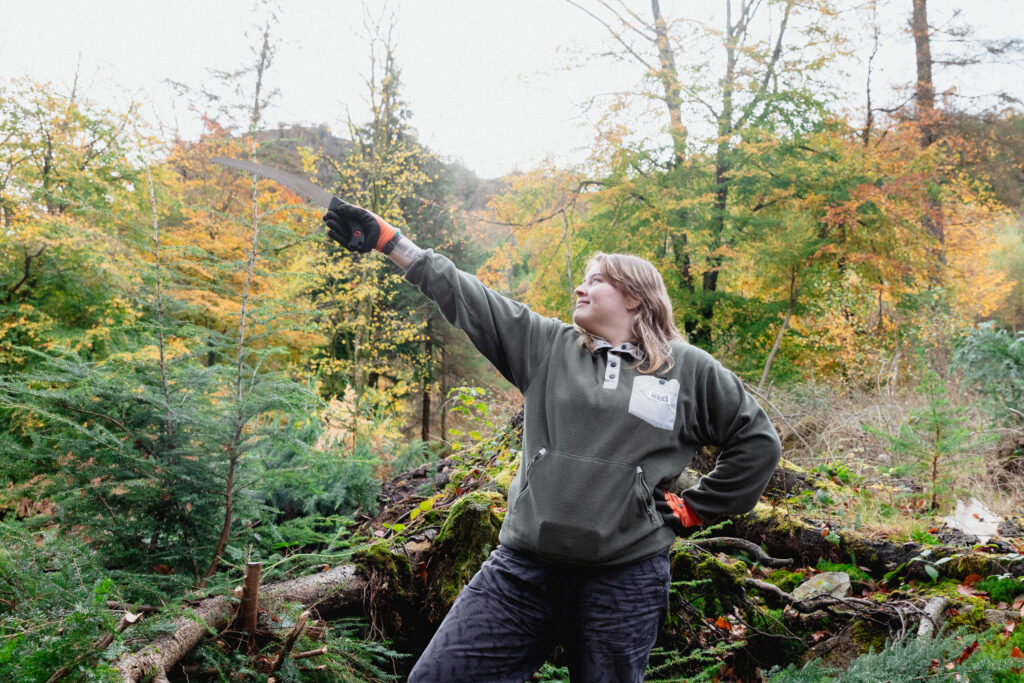
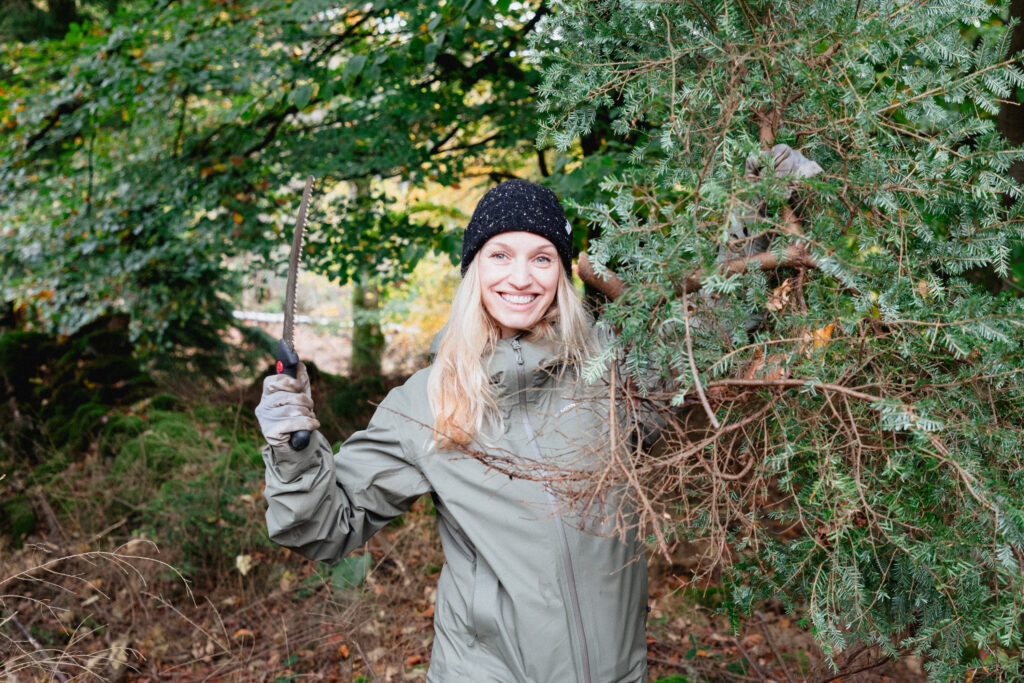
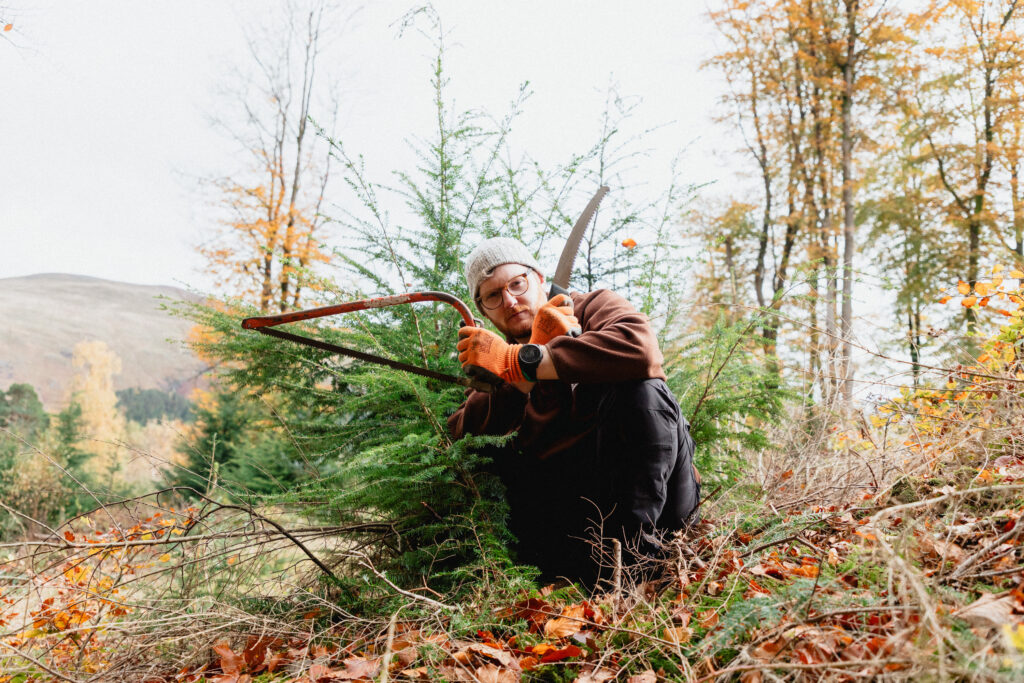
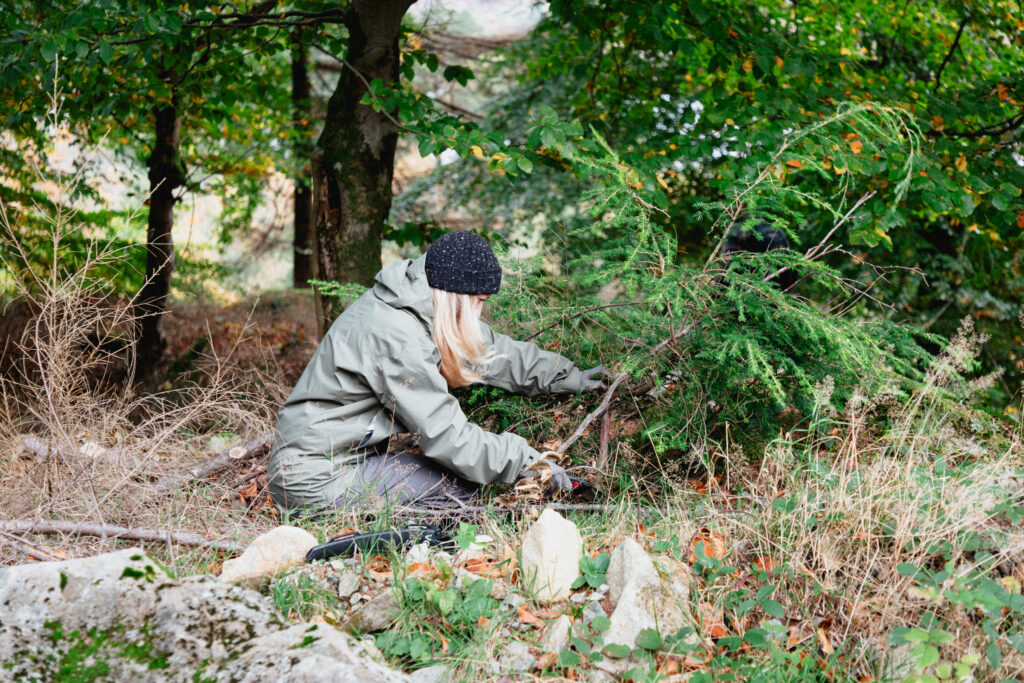
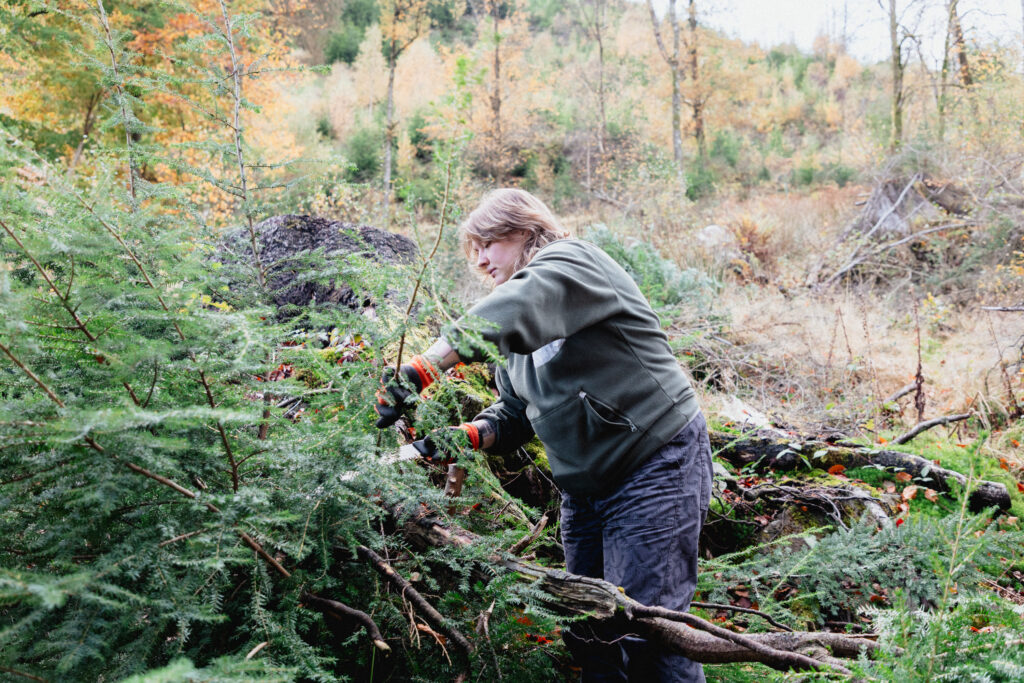
Using a combination of Bow saws and Pruning Saws the team got to work. The aim here was to cut as far to the base of the tree as possible to ensure the tree wouldn’t regrow, once cut the trees can be left on the ground as they aren’t able to reroot.

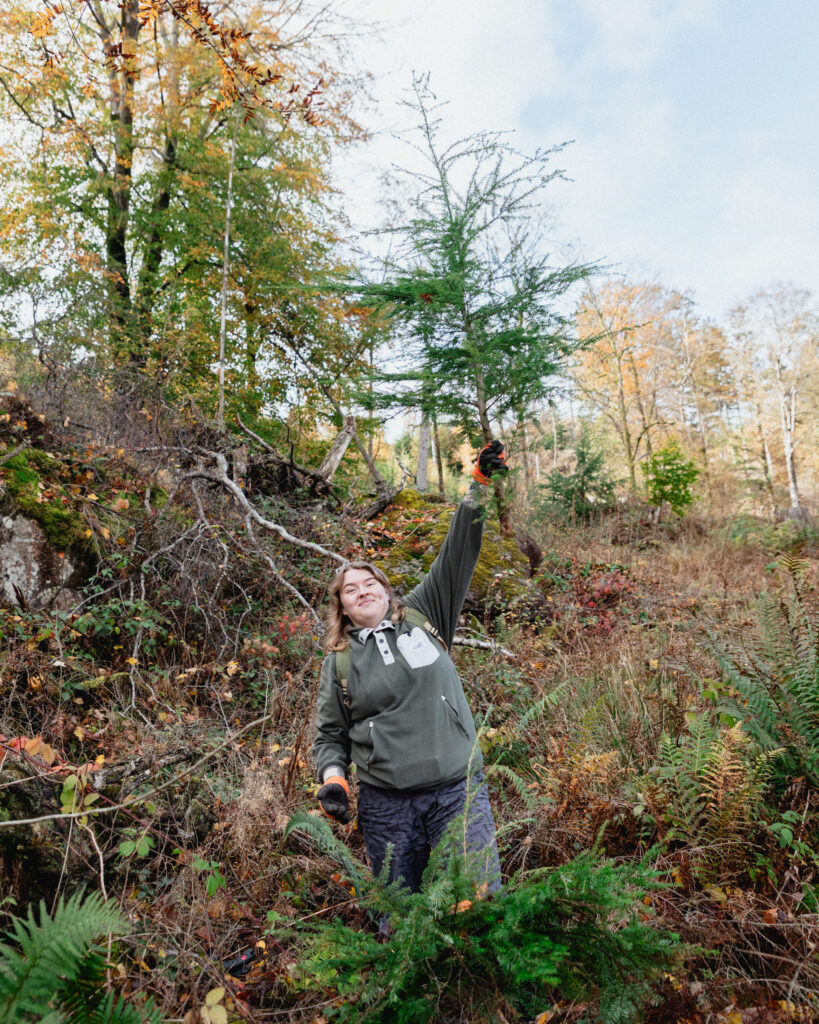
The Hemlock didn’t stand a chance
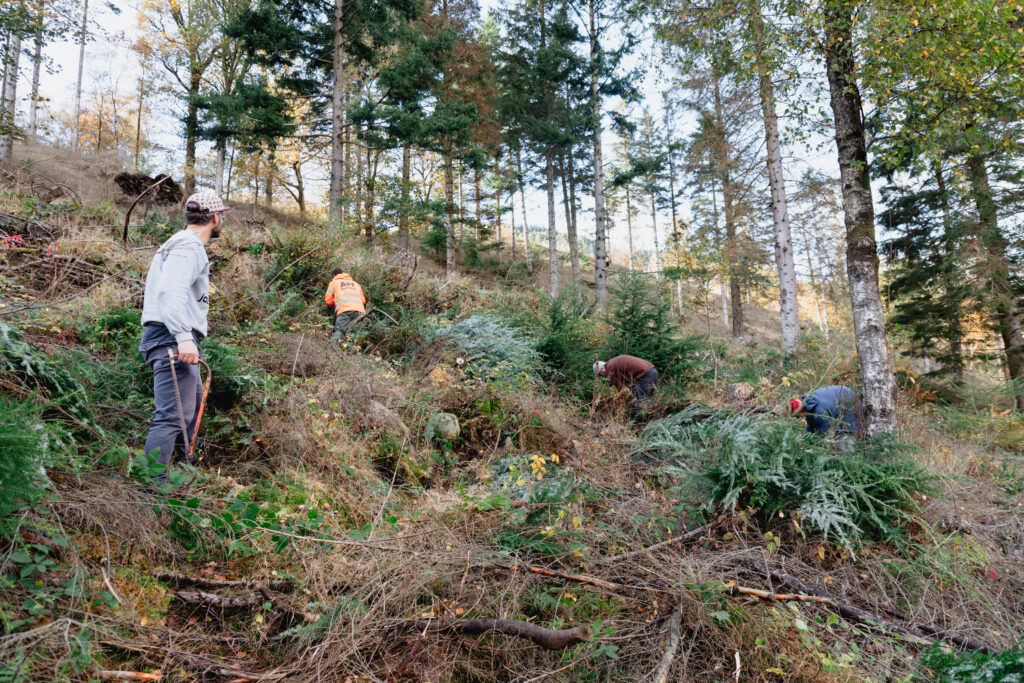
Another great day in the woods, thanks to Cumbria woodlands for their continued help with our woodland work.

